
What Are the Advantages of Playing Solo Piano as Background Music?

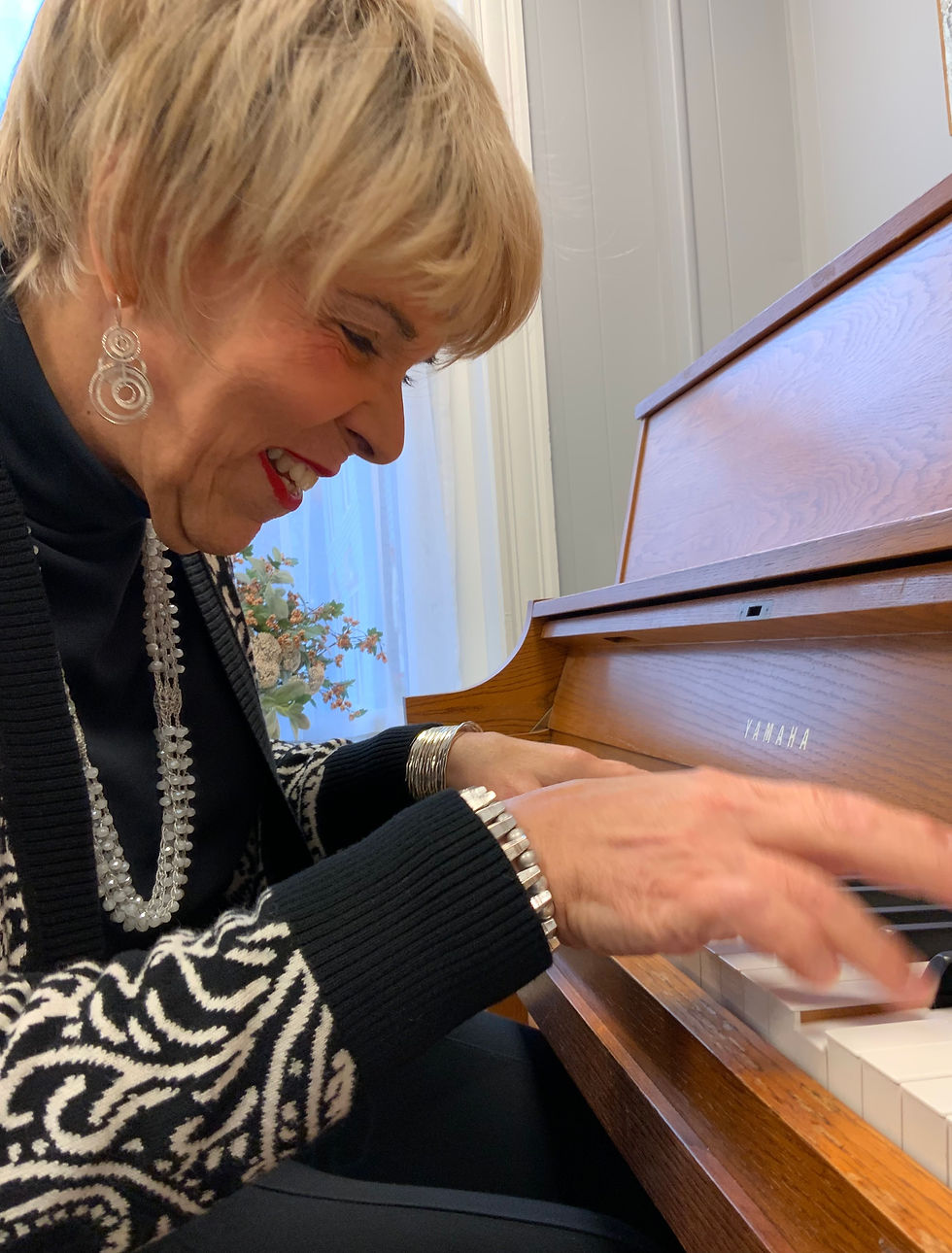
Discovering Solo Piano
Although I occasionally played solo piano during my high school and college years, it wasn’t until I was about thirty that I fully embraced solo piano as my preferred vehicle for musical expression. I’ll spare you the long journey that led me there, but after years of practice, piano lessons, disappointments, and realizing how much I still had to learn, I landed a job playing piano at the Sheraton Hotel in Milford, Massachusetts.
When I first sat down at the grand piano in the hotel lobby, I had no idea I would be playing there every Friday and Saturday night for the next fourteen years.
As I often tell my students, it took me close to six years to truly find my playing style—something that later became part of my Transformational Approach to Piano (TAP system).
The Freedom of Background Music
One of the most important aspects of playing at the hotel was this:
I was playing background music.
People checking into the hotel heard me. Diners across the ramp heard me. Families passing through the lobby heard me. Guests relaxing on nearby couches heard me. Even members of the New England Patriots heard me on nights before home games.
What all these listeners had in common was that they were involved in something else while I was playing.
And strangely enough, that changed everything.
Because I wasn’t under the intense spotlight of formal performance, I had the freedom to experiment. I could try arrangements on the spot, play songs I hadn’t practiced recently, create medleys from Broadway shows, and explore ideas spontaneously.
That freedom developed not only my repertoire but also my flexibility and creativity as a pianist. Most importantly, nervousness gradually fell away.
The Difference Between Playing and Performing
That doesn’t mean I stopped feeling nervous in other situations.
One evening, the outstanding Boston jazz guitarist Don Alessi sat directly beside the piano and listened closely to my playing. He was gracious and encouraging, but knowing that such an experienced musician was paying close attention made me extremely nervous. Who wouldn’t feel that way?
For years, I encouraged my students to seek opportunities to play solo piano as background music because I believed it would help them grow musically and become more relaxed performers.
One of my former high school students began playing weekly at an assisted living facility. Later, he became the pianist for the Massachusetts All-State Jazz Band—an extraordinary accomplishment. But I believe that the weekly background music experience helped shape him into an exceptional solo pianist in a deeper and more lasting way.
A Recent Reminder
Recently, I had an experience that reminded me why I’ve given this advice for so many years.
The Brush and Pencil Club in my 55+ community held its annual spring art exhibit, and the organizers wanted the atmosphere enhanced by solo piano music. My neighbor, the very talented Ron Dukenski, volunteered to play during the three-day exhibit.
Ron’s style reflects his extensive background in musical theater, choral singing, and vocal performance. Armed with fake books, he played everything from Irving Berlin songs to music from Les Misérables, creating his own arrangements directly from chord symbols.
Over the course of the exhibit, there were twelve hours of music to cover—a tremendous amount of playing for any pianist.
Naturally, Ron occasionally needed a break.
And that’s when something unexpected happened.
Listening to Ron play awakened my own desire to sit down at the piano again. Before I knew it, I was back at the keyboard, suddenly remembering my years at the Sheraton decades earlier.
But this time, something felt different.
Now I was older, more experienced, and more musically mature. And just as before, the moment I began playing under the relaxed atmosphere of “background music,” my nervousness disappeared.
As the weekend progressed, my hands loosened up and my playing became increasingly energized and spontaneous.
Ironically, although I was technically providing background music, people began dancing, clapping, smiling, and gathering near the piano.
The music was anything but background.
Why Solo Performance Can Feel So Different
This experience also made me reflect on the solo piano performances I gave at our community’s monthly Musicale in 2024.
Those performances were successful—in fact, I often received standing ovations—but emotionally they felt completely different.
Same room.Many of the same listeners.Same piano.
But during those performances, all eyes and ears were focused entirely on me.
Given my style of playing—with walking bass lines, improvisation, and extended solo passages—that level of attention created tremendous pressure. Even after practicing daily for weeks beforehand, I was still extremely nervous each time I performed.
And despite the success of those concerts, I always came home completely exhausted.
People are often surprised when I describe this difference.
That’s when I explain something important.
“It Takes Two to Tango."
When two musicians perform together, they are engaged in a musical conversation. The audience naturally focuses on the interaction between them. Neither musician carries the full burden of sustaining the audience’s attention alone.
But solo piano performance is different.
When a pianist performs alone in the spotlight—especially in jazz—the performer must sustain not only the music but also the audience’s complete attention. That often requires tremendous energy, focus, virtuosity, and emotional intensity.
Classical pianists experience this somewhat differently because the greatness and familiarity of the repertoire itself—Beethoven, Brahms, and Chopin—carry part of that weight.
In jazz and popular styles, much more of the responsibility rests directly on the performer.
What I Learned from Dave McKenna
I learned a great deal about this from the legendary jazz pianist Dave McKenna.
Years ago, I often heard Dave playing at the Copley Plaza Hotel in Boston. Despite his international reputation, solo recordings, and work with major jazz ensembles, he preferred playing in relaxed settings where the piano functioned as part of the atmosphere rather than as a spotlight attraction.
He once told me that performing in New York jazz clubs where solo pianists were expected to “wow” audiences was stressful and unenjoyable for him. The pressure was simply too great—as if audiences were silently saying the following:
“Impress me. You’re the great Dave McKenna.”
Dave wanted none of that.
And yet, when I heard him at the Copley Plaza, his playing was astonishing—masterful bass lines, effortless improvisation, extraordinary harmonic movement, and complete musical freedom.
The memory of those evenings spent listening to and talking with Dave McKenna has stayed with me for nearly four decades.
The Hidden Gift of Background Music
My recent experience of returning to solo piano as background music reminded me of something important:
Some of the deepest musical growth happens not under pressure, but in relaxed environments where exploration, spontaneity, and communication are allowed to flourish naturally.
Playing background music teaches the following:
flexibility
endurance
repertoire
listening
creativity
spontaneity
relaxation at the piano
And over time, all of those qualities deepen musical expression itself.
Final Thoughts
It is my hope that those of you who play piano will value any opportunity you have to play solo piano as background music.
You may discover that it changes not only your playing—
but your relationship to music itself.
Interested in Exploring Composition or Playing the Piano?
If you are an adult student with some musical background and have ever been curious about composing, I would love to help you begin. If you played the piano in the past and want help reawakening your musical interest, I'd like to help you do that.
Composition Lessons https://www.mascaripiano.com/composition-lessons
One-on-one guidance for composers at any stage—whether you’re just beginning, returning after time away, or developing your own musical voice.
🎹 Piano Lessons https://www.mascaripiano.com/piano-lessons Personalized piano instruction for adults and students of all levels, grounded in musical understanding, technique, and expressive playing.
Free Consultation https://www.mascaripiano.com/contact Not sure where to start? Schedule a free consultation to talk about your goals, questions, and the best path forward for you.
Free Courses https://www.mascaripiano.com/free-courses
Explore complimentary courses designed to spark creativity, build confidence, and help you reconnect with your musical curiosity.

About Diana Mascari
Composer, Author, Jazz Pianist
and Teacher of Piano and Composition
Diana Mascari is a composer, pianist, educator, and author whose work bridges classical, jazz, and contemporary music, with a deep commitment to creativity as personal expression. With decades of experience as a performer and teacher, she is passionate about helping musicians reconnect with curiosity, confidence, and their own creative voice.
She is the author of two books on music and creativity, including
Awakening the Composer Within You which is published and available on Amazon https://a.co/d/07wjywBB
and
Reawakening the Music Within You which is published and available on Amazon https://a.co/d/5SW5HhN
For information about piano and composition lessons, free consultations, free courses, and additional resources, visit her website at www.mascaripiano.com


Comments